

Every compressed air system relies on an air receiver tank, also known as a reservoir or pressure vessel. Regardless of who manufactured the tanks at your facility, one thing remains constant: each tank must be protected by a correctly sized, and properly functioning Safety Relief Valve (SRV), often referred to as a Pressure Relief Valve (PRV).
While these valves are often overlooked, they play a critical role in protecting personnel, equipment, and facilities from dangerous overpressure conditions. What many organizations don't realize is that safety relief valves are also subject to specific regulatory requirements in Ontario.
Understanding and managing these requirements can help facilities maintain compliance, reduce risk, and avoid costly oversights.
What Is a Safety Relief Valve?
A Safety Relief Valve (SRV) is designed to automatically release pressure when a compressed air system exceeds its allowable operating pressure. Without a properly functioning relief valve, excessive pressure can potentially damage equipment and create significant safety concerns. For this reason, SRVs are considered one of the most important safety devices installed on a pressure vessel.
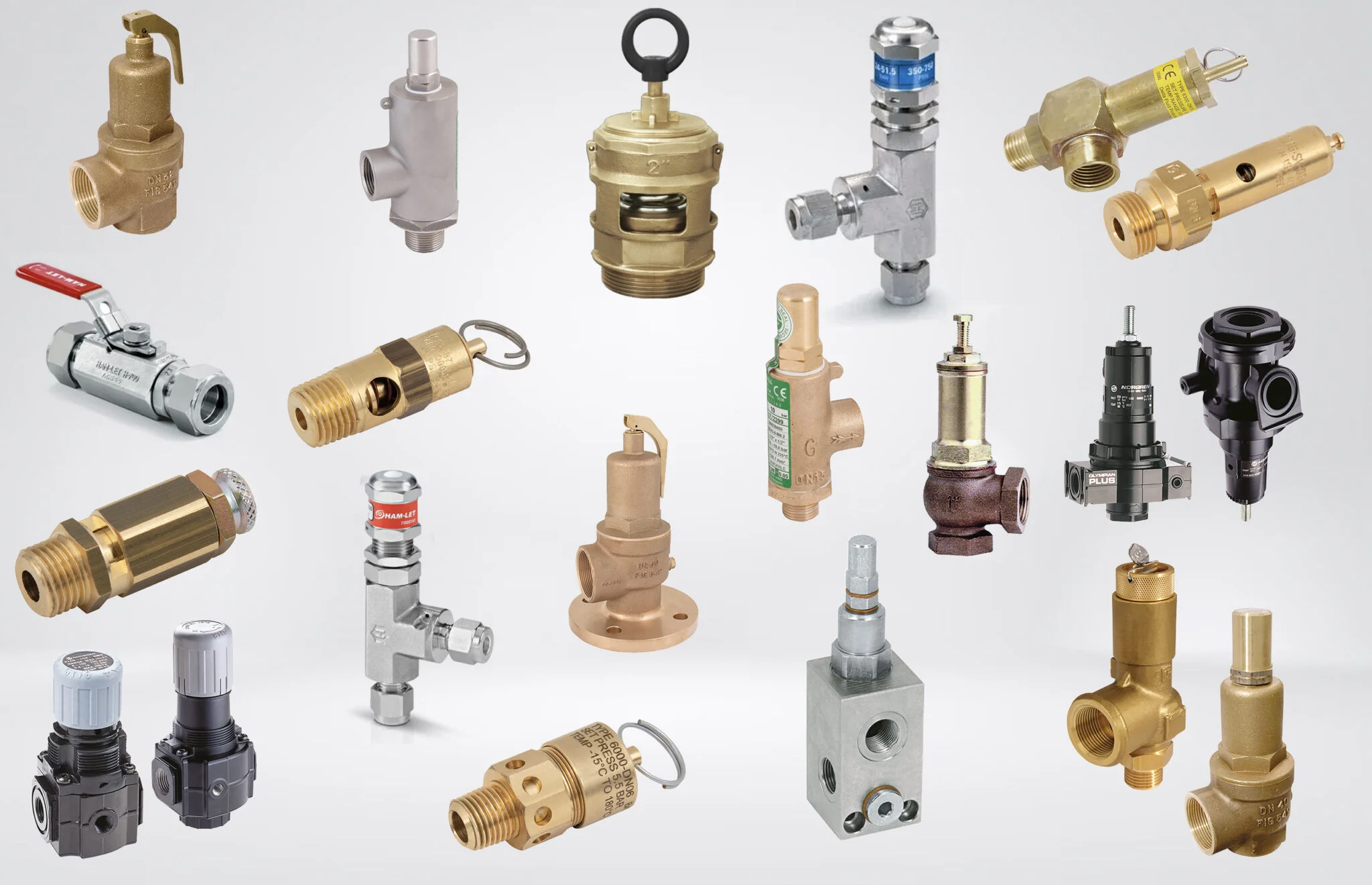
In compressed air applications, the terms Safety Relief Valve (SRV) and Pressure Relief Valve (PRV) are often used interchangeably.
Safety Relief Valves on Rotary Screw Compressors
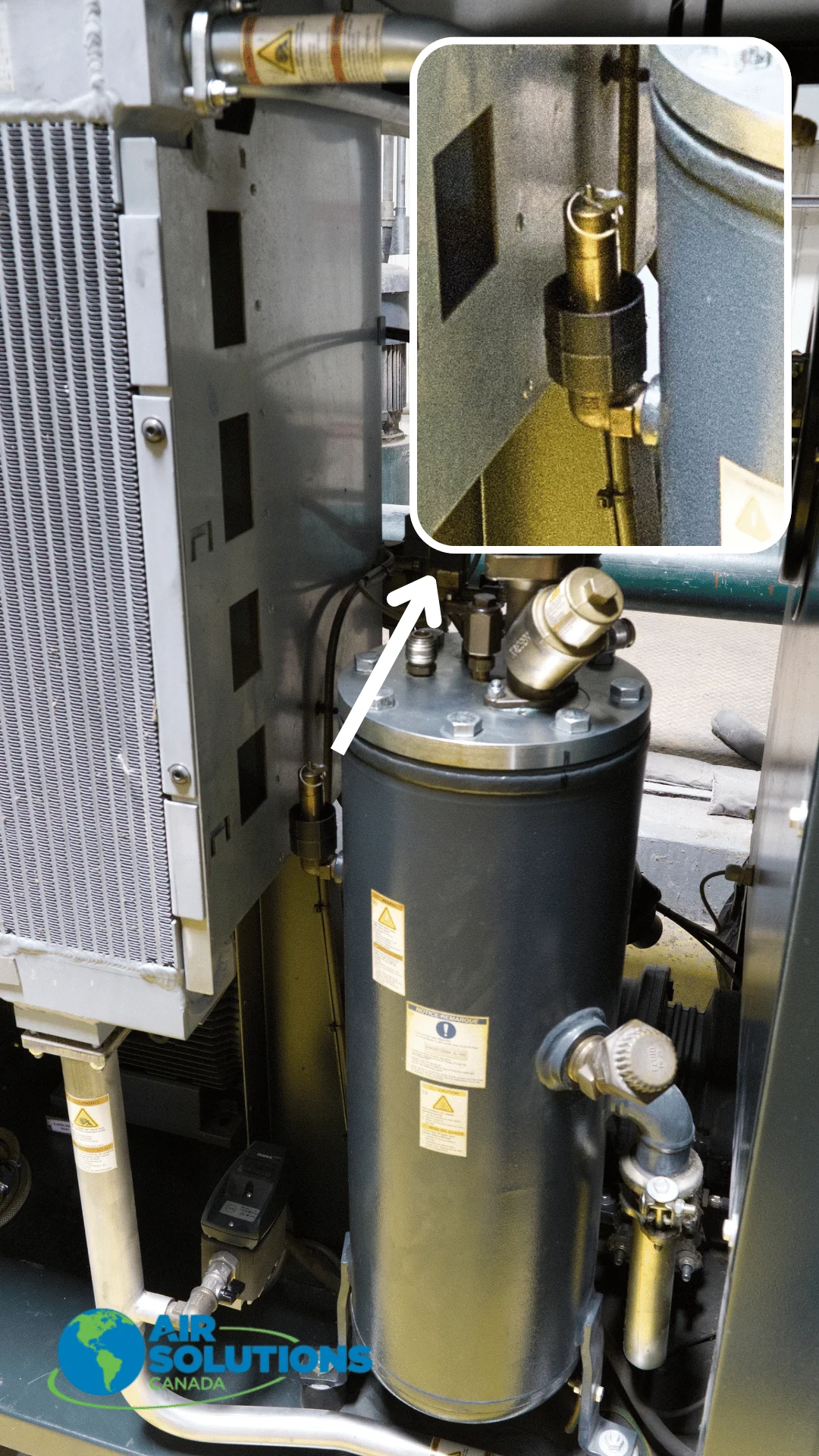
Safety Relief Valves are not only installed on air receiver tanks. Most rotary screw air compressors also incorporate one or more Safety Relief Valves as part of the compressor package itself.
For example, compressors such as the Kaeser ASD 40S and similar rotary screw compressors typically include a Safety Relief Valve mounted on the air/oil separator vessel. This valve serves as a critical safety device designed to protect the separator tank from excessive internal pressure. In the unlikely event of a pressure control malfunction, the SRV will open to relieve pressure before the vessel reaches an unsafe condition.
Because Safety Relief Valves can be found on both air receiver tanks and compressor pressure vessels, facilities should ensure that all installed relief valves are included in their maintenance and compliance programs. While air receiver tank SRVs are often the primary focus during inspections, relief valves located on compressor packages should also be inspected, documented, and replaced or recalibrated according to manufacturer recommendations and applicable regulatory requirements.
Ontario TSSA Requirements for Safety Relief Valves
In Ontario, the Technical Safety Standards Authority (TSSA) establishes regulations for pressure vessels and related safety devices, including Safety Relief Valves (SRVs) and Pressure Relief Valves (PRVs) used on compressed air systems.
To help ensure pressure vessels operate safely and remain compliant, TSSA requires facility owners and operators to follow two key maintenance requirements:
-
Annual Testing Requirement
Within the Province of Ontario, it is mandatory to manually test and document a safety relief valve operation every year. This annual testing helps verify that the valve remains functional and capable of operating as intended. Moreover, proper documentation should be maintained as part of a facility's compliance records.
-
Five-Year Replacement or Recalibration Requirement
In addition to annual testing, TSSA requires that Safety Relief Valves be:
- Recalibrated once every five years, or
- Replaced once every five years
Facilities that fail to monitor valve age may unknowingly operate with valves that have exceeded the required service interval.
Why Do These Requirements Matter?
Safety Relief Valves are often the last line of defense against excessive pressure within a compressed air system. Failure to properly maintain, test, or replace these devices can increase operational risk and may result in compliance concerns. By maintaining annual testing records and tracking five-year replacement intervals, facilities can:
- Support compliance with Ontario TSSA requirements
- Health & safety risks for personnel within your facility
- Improve pressure vessel safety
- Reduce the risk of equipment damage and unplanned downtime
- Simplify maintenance recordkeeping and audit preparation
- Ensure critical safety devices remain reliable throughout their service life
Why Facilities Often Miss Compliance Deadlines
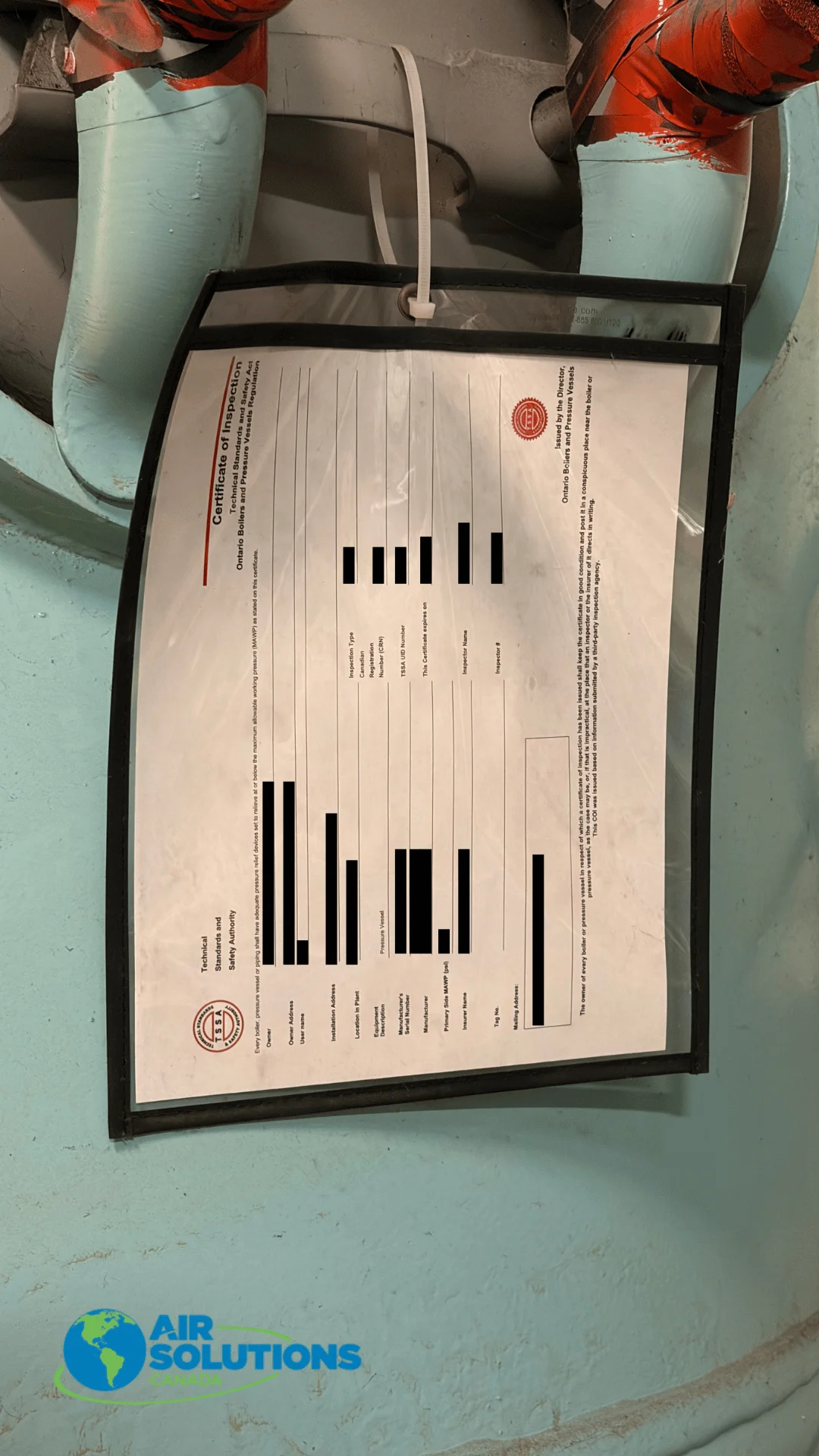
Unlike other maintenance activities that are built into a plant's preventive maintenance schedule, safety relief valve replacement dates are often overlooked. Some of the common reasons we’ve seen include:
- Missing installation records
- Staff turnover
- Equipment acquired through acquisition or expansion
- Multiple pressure vessels across several facilities
- Lack of centralized compliance tracking
When documentation is incomplete, determining whether a valve meets current regulatory requirements can become difficult.
How to Determine Whether Your SRV Needs Replacement
If you're responsible for compressed air system maintenance, ask the following questions:
- When Was the Valve Installed?
If installation records cannot be located, the valve may require further review. - Has Annual Testing Been Documented?
Ontario regulations require annual testing records, and missing documentation may indicate gaps in compliance procedures. - Is the Valve Approaching Five Years of Service?
Even if the valve appears to be functioning normally, TSSA requirements still require recalibration or replacement every five years. - Is the Valve Showing Signs of Wear?
Corrosion, leakage, contamination, or physical damage may indicate the need for replacement.
Why Consider a Complete Air Receiver Tank Dressing Kit?
When replacing a Safety Relief Valve (SRV), it is often a good opportunity to inspect other critical air receiver tank accessories. Many facilities choose to replace these components together as part of an air receiver tank Dressing Kit, helping improve safety, reliability, and compliance.
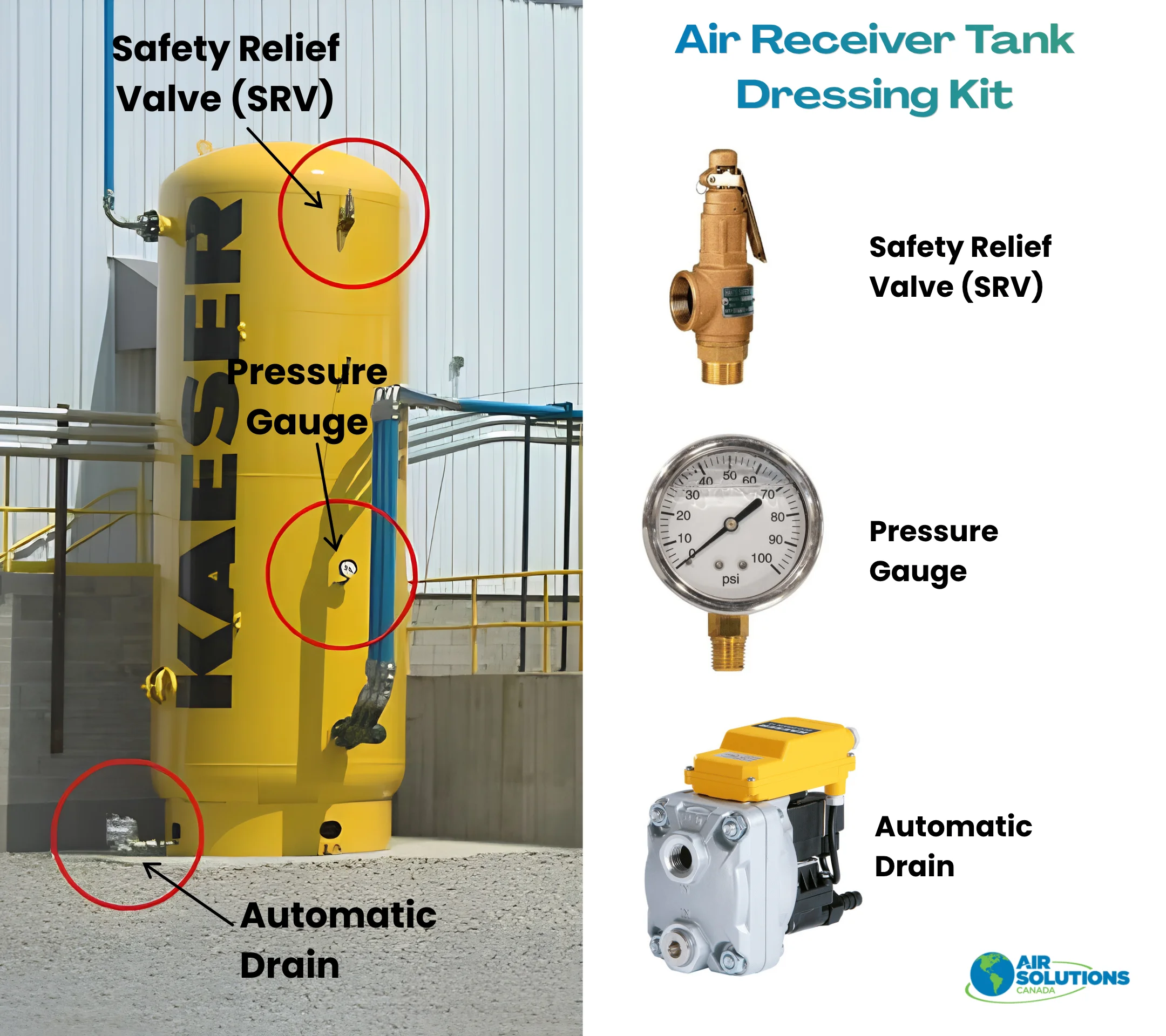
A typical dressing kit includes:
- Safety Relief Valve (SRV)
- Pressure Gauge
- Automatic Drain
Reviewing these components during a scheduled SRV replacement can help ensure the pressure vessel remains properly equipped, compliant with manufacturer recommendations, and ready for inspection. It can also reduce future maintenance trips by addressing multiple wear items during a single service visit.
Safety Relief Valve Selection and MAWP Requirements
One of the most important considerations when replacing an SRV is ensuring that the valve's pressure setting is appropriate for the air receiver tank.
Best practice dictates that the SRV's pressure rating must be lower than the tank's Maximum Allowable Working Pressure (MAWP). This ensures the valve can relieve excess pressure before the pressure vessel reaches a potentially unsafe operating condition.
For example, if an air receiver tank has a MAWP of 200 PSI, the Safety Relief Valve must be set below that pressure limit.
Automatic Drain Options
Automatic drains help remove condensate from air receiver tanks, reducing the risk of internal corrosion, poor air quality, and unnecessary maintenance. Some common drain options include:
- Zero-Loss Drain: Automatic drains, like Kaeser ECO-DRAIN, discharge condensate while minimizing compressed air loss, helping improve overall energy efficiency. While they have a higher upfront cost, they often result in lower operating costs over time.
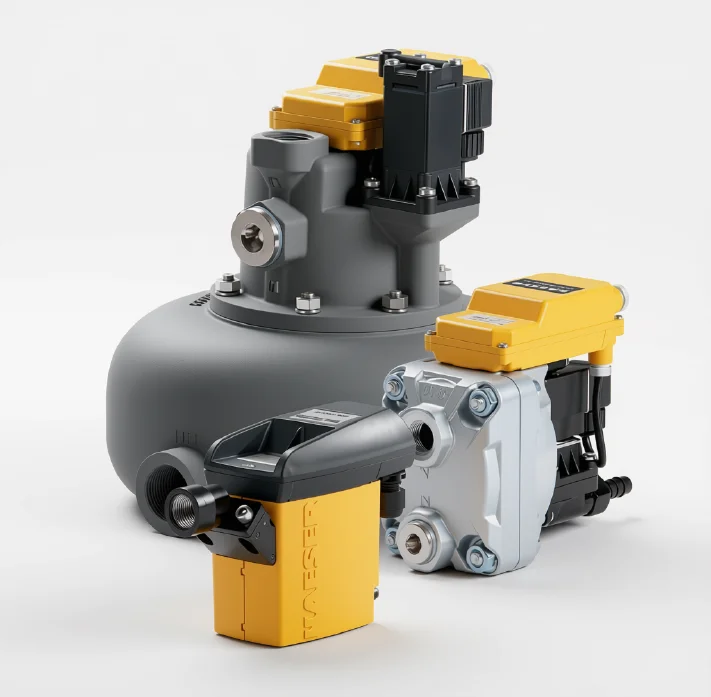
Kaeser ECOdrains - Timed Solenoid Drain: These drains open at preset intervals to remove condensate. They are cost-effective and widely used, but improper timer settings can either waste compressed air or leave excess moisture in the tank.
- Float-Style Drain: Float-style drains use a mechanical float mechanism to automatically discharge condensate. They are simple, reliable, and require no electrical power, although periodic cleaning and maintenance may be necessary.
- Manual Ball Valve Drain: This is an economical option that is easy to install and maintain. However, it relies on manual intervention, and missed draining can lead to condensate buildup and an increased risk of corrosion.
A Better Time for a Complete Tank Safety Review
Because the Safety Relief Valve, pressure gauge, and condensate drain are all mounted on or associated with the air receiver tank, many facilities choose to inspect or replace these items during a scheduled SRV replacement. Reviewing all three components together can help:
- Improve pressure vessel safety
- Support compliance initiatives
- Reduce future maintenance visits
- Minimize unplanned downtime
- Ensure critical tank accessories remain in good working condition
If your facility is already planning an SRV replacement, it may be an ideal opportunity to evaluate whether a complete air receiver tank dressing kit upgrade would provide additional safety and reliability benefits.
The Cost of Ignoring Safety Relief Valve Maintenance
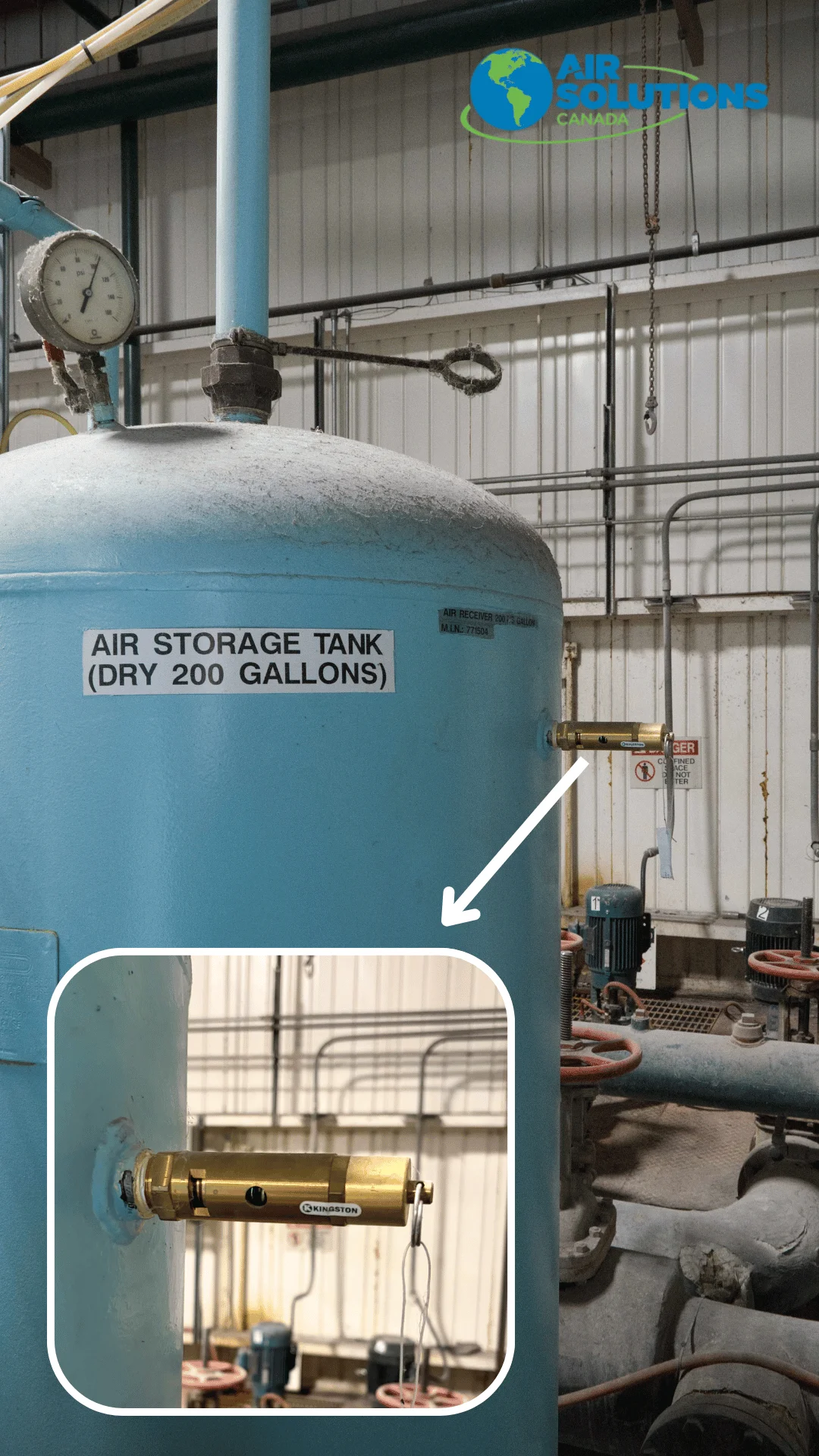
The consequences of overlooking relief valve compliance can extend beyond regulatory concerns. Some of the potential risks include:
- Reduced pressure vessel protection
- Increased risk of equipment damage
- Unexpected downtime
- Compliance deficiencies during inspections
- Increased administrative burden when records are unavailable
A proactive replacement strategy can help facilities avoid these issues while simplifying ongoing maintenance planning.
Taking a Proactive Approach to SRV Compliance
Rather than waiting until a TSSA inspector performs an unannounced site visit, which potentially reveals a problem with your SRV, many facilities now adopt a structured approach to relief valve management. This process often includes:
- Asset identification
- Annual testing documentation
- Replacement schedule tracking
- Planned valve replacement
- Maintenance record management
In severe cases, TSSA has the authority to shut down a compressed air system until it is brought into compliance with the applicable regulations. Hence, we always recommend that creating a repeatable process helps ensure compliance requirements are consistently met year after year.
How Air Solutions Canada Supports Compliance
Air Solutions Canada helps facilities maintain compressed air system reliability and support pressure vessel compliance requirements. Our SRV replacement services include:
- Safety Relief Valve identification
- Replacement valve sourcing
- Installation support
- Labour for valve replacement
- Compliance-focused recommendations
- Ongoing replacement scheduling assistance
So, whether you're managing a single compressor room or multiple facilities, maintaining awareness of annual testing and five-year replacement requirements can significantly reduce compliance risk.
Our team can review your compressed air system, identify safety relief valves nearing their compliance deadlines, and recommend a proactive replacement strategy that aligns with Ontario TSSA requirements. Contact us today to schedule an SRV compliance review and help ensure your pressure vessels remain safe, reliable, and audit ready.
Would You Pass a Spot Check?
If someone walked into your compressor room today, could you show when your safety relief valves were last inspected, tested, or replaced?
If the answer is “I’m not sure,” it may be time to check.
Air Solutions Canada can help identify, inspect, and manage safety relief valves throughout your compressed air system—before a small, inexpensive component becomes a much bigger problem.
Final Thoughts
Safety Relief Valves are easy to overlook, yet they play a critical role in both system safety and regulatory compliance. Ontario facilities operating compressed air systems should ensure that Safety Relief Valves are manually tested annually, testing is properly documented, and valves are recalibrated or replaced every five years.
A proactive approach not only helps meet TSSA requirements but also contributes to safer and more reliable, compressed air operations. If you're unsure of your valve's age, testing history, or replacement status, now may be the ideal time to review your pressure vessel records and replacement schedule.
What is a Safety Relief Valve?
A Safety Relief Valve is a pressure-protection device that protects your compressed air system from dangerous overpressure by automatically releasing pressure before it exceeds the equipment’s safe operating limit.
How can I tell when a Safety Relief Valve (SRV) was installed?
Most Safety Relief Valves (SRVs) have a tag or nameplate showing the manufacturer, pressure rating, and often the installation, certification, or recalibration date. Checking this tag can help determine whether the valve is approaching the TSSA-required five-year recalibration or replacement interval. If the tag is missing or unreadable, maintenance records should be reviewed to verify the valve's age.
What is MAWP on an air receiver tank?
M.A.W.P. (Maximum Allowable Working Pressure) is the highest pressure an air receiver tank or pressure vessel is designed to safely contain under normal operating conditions. This rating is set by the manufacturer and is listed on the tank nameplate. When selecting tank accessories, the Safety Relief Valve (SRV) should be set below the tank's MAWP. Knowing your tank's MAWP is essential for safe operation, proper component selection, and pressure vessel compliance.
Does every compressed air receiver tank require a safety relief valve?
Yes. Air receiver tanks and pressure vessels require properly sized pressure-relief protection as part of safe compressed air system operation.
Are Safety Relief Valves Expensive?
Cost is relative to the size of the relief valve. They range from <$50 for a small ¼” ported valve, to as much as $1,500 for a very large valve. The true risk of cost is two-fold. 1) The inherent safety of your staff and equipment, and 2) The cost incurred, should a TSSA inspector shut your compressed air system down until the non conformance is rectified.
How often must a safety relief valve be tested in Ontario?
Ontario requirements mandate that a safety relief valve's operation be manually tested and documented annually.
How often must a safety relief valve be replaced?
According to TSSA requirements, safety relief valves must be recalibrated or replaced every five years. However, valve age, condition, service history, and annual test results should also be considered. If the valve’s history is unknown or its reliability cannot be verified, replacement may be the safest and most cost-effective option.
What happens if a safety relief valve is not replaced after five years?
Operating beyond the required service interval may create compliance concerns and increase operational risk. Facilities should maintain records and replacement schedules to ensure ongoing conformity with applicable regulations.
Can a safety relief valve be recalibrated instead of replaced?
Yes. TSSA requirements allow for either recalibration or replacement every five years, provided the valve remains compliant with applicable standards.
What could TSSA look for during an inspection?
Overpressure protection is an important part of pressure equipment safety. A missing, inoperable or incorrectly set safety relief device can be considered a high-risk violation.
Do we need records of inspections, testing and replacements?
Yes. Good documentation provides a clear history of the valve and helps demonstrate that your pressure equipment is being properly maintained.
Our air receiver is exempt from periodic inspection. Can we ignore the relief valve?
No. An exemption from periodic inspection does not mean safety devices should be ignored. Pressure equipment still needs to be maintained in safe operating condition.
Who is responsible for making sure the relief valves are compliant?
Ultimately, the owner/operator of the pressure equipment needs to ensure that the equipment and its safety devices are properly maintained.
My compressor is serviced regularly. Does that mean my relief valves are being tested?
Not necessarily. Routine compressor servicing does not automatically mean your safety relief valves have been inspected or tested. Ask your service provider—and make sure it’s documented.
Can a relief valve look fine but still fail?
Yes. Corrosion, contamination, mechanical wear or simply years without operation can prevent a valve from opening correctly when it is actually needed.
What happens if the valve is set at the wrong pressure?
A relief valve must protect the equipment within its allowable pressure limits. An incorrectly selected or set valve can leave your pressure vessel inadequately protected.
Could a failed relief valve result in equipment being shut down?
Potentially, yes. A serious safety violation may require affected equipment to be taken out of service until the issue has been corrected.